
COVID-19 has not done women any favours when it comes to the superannuation gender gap. While its full impact on superannuation will not be known for some years, available data indicates that women were more likely to have lost their jobs or had reductions to their paid working hours1 because of:
- pandemic related lockdowns
- the move to remote learning for school-aged children
- the loss of childcare (both formal and informal arrangements) with the closure of childcare centres and restrictions around movement between households preventing in-home care from family members.
These factors have also contributed to a disproportionate number of young women giving up study1, which is likely to impact future earnings over their lifetimes. The result is less money flowing into women’s superannuation accounts.
Pandemic stimulus packages, in the main, did not target the most affected groups. One that did acknowledge the impact on women was the Victorian Government’s “Free Kinder” initiative, which sought to remove financial barriers associated with women with young children from returning to work2. Federal government recovery measures were primarily delivered through tax cuts and infrastructure spending, delivering relief to higher earners (disproportionately males) and the male-dominated construction and energy sectors1.
Why does the superannuation gender gap matter and how can it be fixed?
Women are more likely to rely on the age pension as their primary source of income in retirement, and elderly women experience higher rates of poverty than their male counterparts3. Irrespective of issues around gender equality, lowering dependence on the age pension and reducing poverty levels should provide a call to action.
Various organisations have floated suggestions to help women close the superannuation gender gap, particularly as it relates to the contributions lost as a result of parental leave. These vary from something as simple as the payment of superannuation on top of the government’s current paid scheme, to more complex approaches involving contribution tax credits applied in the years following return from parental leave4. No action was taken on this in the 2022 Budget, although it did include changes to the scheme which sought to increase choice and flexibility for families5 by enabling them to choose how to split leave payments between parents more easily.
How big is the gap?
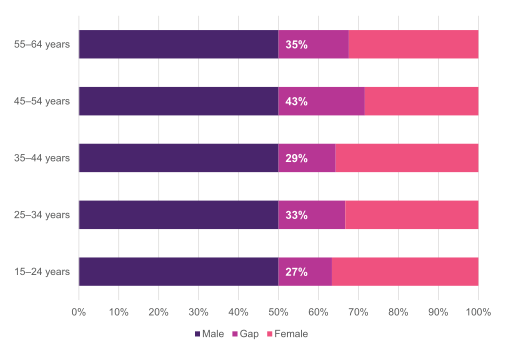
In the decade leading up to age 65, the gap in median superannuation account balances is 35%6. That means a woman approaching retirement has 35% less in superannuation than a man of the same age. But the gap exists at all ages, peaking at ages 45 to 54 years.